Holiday Event | 20% OFF COSMETIC | $1000 OFF INVISALIGN | DECEMBER 19TH, 22ND, 23RD | Book Now

Categories
Cosmetic

Gummy Smile Treatment: Causes & How to Fix


Your smile should make you feel unstoppable.

If you’ve ever caught yourself holding back a laugh, tilting your head a certain way in photos, or pressing your lips together because you feel like your gums show too much, you’re not alone. A “gummy smile” is more common than you might think, and it’s not just about appearance. For many people, a gummy smile holds them back from feeling confident, expressive, and at ease when they smile.

The good news? Today’s gummy smile treatment options are more advanced, precise, and minimally invasive than ever. Whether your gums are naturally more prominent or your teeth appear shorter, modern dentistry offers solutions that balance your smile beautifully, without overcorrecting or creating an artificial look.

At The Chicago Dental Studio, we approach gummy smile correction as an art form. Our team of experienced and skilled professionals will look at your unique facial features, tooth proportions, and gum line to design a smile that’s uniquely yours.

Let’s break down what a gummy smile is, what causes it, and how we can help you achieve a smile you can’t wait to show off.

What is a “Gummy Smile”?

What is a gummy smile? A “gummy smile” isn’t a medical diagnosis; it’s a way to describe a smile where the gums show more than one might like. There’s no strict rule for what counts as “too much” gum; it’s entirely subjective. What feels out of balance to one person may feel perfectly natural to another.

From an aesthetic perspective, a balanced smile usually shows most or all of the upper teeth and just a small amount of gum tissue. If more gum is visible, especially more than 3 to 4 millimeters, some people perceive it as “gummy.”

It’s important to remember: a gummy smile doesn’t mean your mouth is unhealthy. It’s simply a variation in the way your teeth, gums, lips, and jaw interact when you smile. And like any other aspect of your smile, it can be enhanced if you choose.

What Causes a Gummy Smile?

Several factors can contribute to causing a gummy smile, and sometimes more than one is at play. Understanding the specific cause(s) is key to designing the right treatment for you.

  • Excess Gum Tissue: Sometimes, the gums simply cover more of the tooth surface than average. This can be due to genetics, gum development, or the way teeth erupted during childhood.
  • Short or Worn-Down Teeth: Your teeth might be perfectly proportional in structure, but wear over time or naturally shorter tooth shapes can make them appear smaller compared to your gums.
  • Hyperactive Upper Lip Muscles: When the muscles that lift your upper lip are overactive, your lip may rise higher than average when you smile, revealing more gum tissue than you’d like.
  • Jaw Development & Bite Alignment: The way your upper jaw develops plays a big role in your smile. If it’s positioned slightly forward or downward, more gum can naturally show when you smile. Certain bite alignments can also make gums more prominent.

While these causes might sound technical, they’re all very common and, most importantly, highly treatable. Once we identify the “why” behind your gummy smile, we can match it to a precise, personalized solution.

How to Fix a Gummy Smile: Treatment Options

At The Chicago Dental Studio, gummy smile treatment is never one-size-fits-all. We blend artistry with advanced techniques to ensure your results look natural and balanced and like you.

Here are some of the most effective options:

Botox®

Best for: Hyperactive upper lip muscles

By relaxing the muscles that lift your upper lip, Botox® lowers the lip slightly when you smile, reducing gum exposure.

  • Treatment time: About 10 minutes
  • Recovery: None! You can typically return to your day immediately. However, as with any medical procedure, there are potential risks and side effects. We’ll discuss these in detail during your consultation.
  • Results: Typically visible within a few days, can take up to two weeks; lasts 3–6 months

Laser Gum Contouring

Best for: Excess gum tissue

This minimally invasive procedure uses laser technology to gently reshape the gum line, revealing more of your natural tooth structure and improving tooth-to-gum proportions.

  • Treatment time: Usually under an hour
  • Recovery: Mild tenderness for a few days
  • Results: Immediate improvement, with final healing in 1–2 weeks

Learn more about our cosmetic approach to gum contouring here.

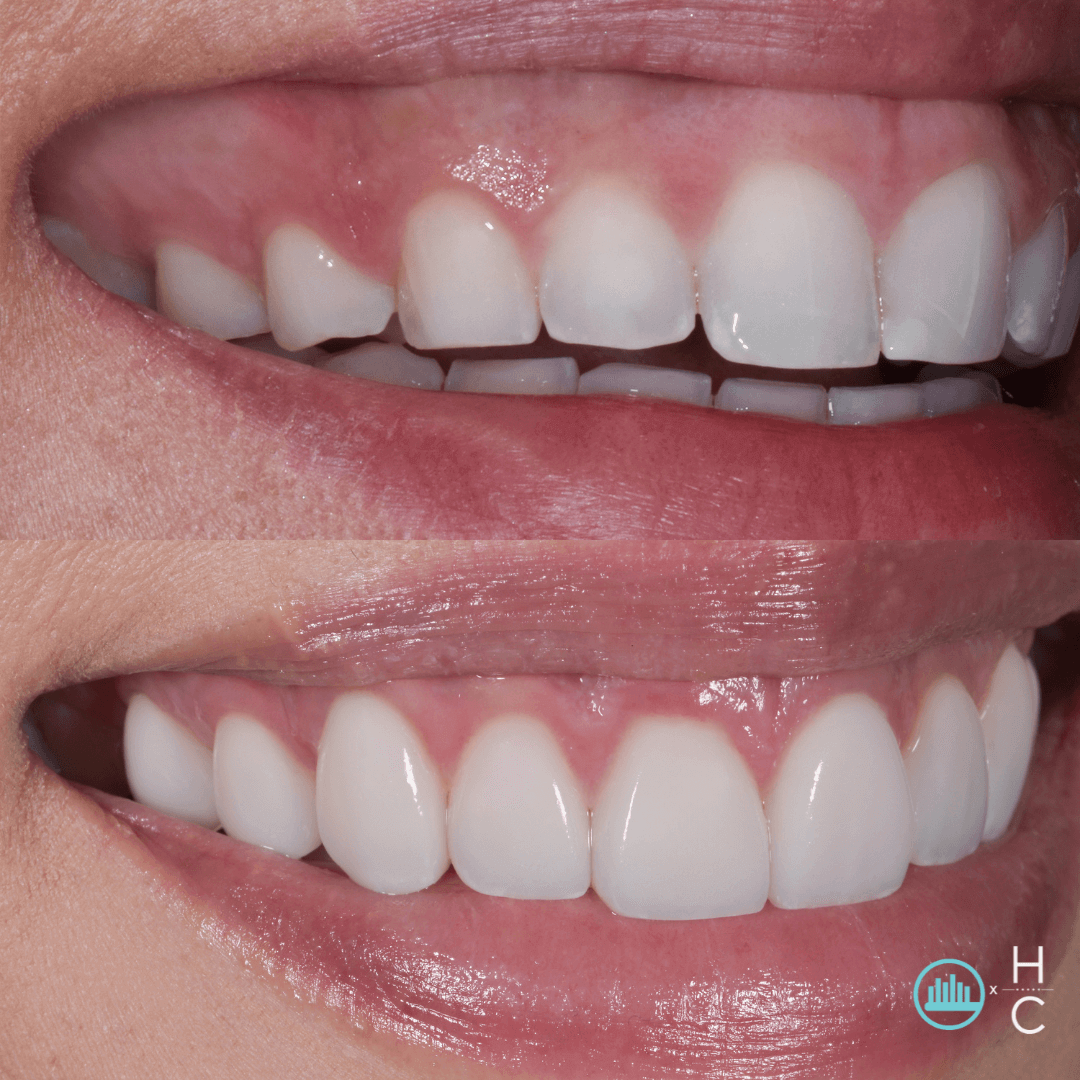
Veneers or Crowns

Veneers For Gummy Smile – Best for: Short or worn-down teeth

Custom veneers or crowns can lengthen the visible portion of your teeth, creating a more balanced look with your gums. They also enhance tooth color and shape.

  • Treatment time: 2–3 visits
  • Recovery: Minimal—some mild sensitivity may occur
  • Results: Long-lasting, durable, and natural-looking

Orthodontic Treatment

Best for: Jaw alignment or bite-related gummy smiles

If your gummy smile stems from how your teeth and jaw are aligned, orthodontics, like Invisalign®, can help reposition them for a better gum-to-teeth ratio.

  • Treatment time: Varies (often 6–18 months)
  • Recovery: No downtime; gradual changes over time
  • Results: Functional and aesthetic improvement

Often, we’ll combine two or more of these cosmetic dentistry treatments for the best, most natural results, something we decide together after a detailed smile assessment, ensuring you receive a personalized treatment plan. Click to find an orthodontist near me!

When to See a Smile Specialist

If you’ve ever looked in the mirror or at a photo and thought anything like, “I wish I could see more teeth and less gum,” that’s your cue to explore gummy smile treatment options. 

Other signs include:

  • You notice your gums before your teeth when you smile.
  • You avoid big, open-mouth smiles in pictures.
  • You feel your gums draw attention away from your teeth.

An expert consultation is the best way to identify the exact cause of your issues and choose a gummy smile treatment plan tailored to your needs. During this consultation, we’ll conduct a detailed smile assessment, discuss your concerns and goals, and recommend a personalized treatment plan. At The Chicago Dental Studio, we focus on minimally invasive options first and always aim for results that look effortless, not overdone.

Your Best Smile Starts at The Chicago Dental Studio

Your smile should be a source of joy, not self-consciousness. With today’s advanced gummy smile treatments, you don’t have to settle for holding back your expression.

Whether your ideal solution is quick Botox, artistic laser gum contouring, precision veneers, or orthodontics, we’ll design a plan that’s uniquely yours, crafted in our modern, welcoming studio space.

Book your consultation today, and let’s create a smile that’s balanced, confident, and completely you with our professional cosmetic dentistry specialists.

Categories
Cosmetic

Can a General Dentist Do Dental Cosmetic Surgery?


Do you have any questions about whether a general dentist can handle aesthetic dental surgery? Let’s investigate!

Can a General Dentist Do Cosmetic Dental Surgery?

Cosmetic dental surgery procedures are designed to improve the appearance of your teeth and smile. Treatments including veneers, dental implants, orthodontics, and teeth whitening fall under this category. Many general dentists also do cosmetic operations, even though cosmetic dentistry is regarded as a specialty.

The functional and cosmetic facets of dental care are areas that general dentists are trained to handle. They can conduct certain aesthetic procedures since they have a strong foundation in dental procedures. For instance, general dentists may perform dental veneer procedures, place dental crowns, or give braces or clear aligners as orthodontic treatment options. These procedures can greatly enhance your smile and the look of your teeth.

However, when it comes to aesthetic dental surgery, general dentists’ levels of competence and ability may differ. Consult a cosmetic dentist who has undergone further training and is an expert in cosmetic dentistry if you need complicated operations or extensive smile makeovers.

The complexity of the operation and the results you are looking for ultimately determine whether you should go to a regular dentist or a cosmetic dentist for your aesthetic dental requirements. Finding the best strategy to get the smile of your dreams will be made easier with the guidance of a dental expert.

teeth cosmetic surgery

What Do Cosmetic Dentists Do?

Dental specialists with further training and education in cosmetic dentistry are known as cosmetic dentists. They concentrate on enhancing your smile’s attractiveness and have a thorough grasp of the numerous cosmetic procedures. Cosmetic dentists are knowledgeable in procedures including veneers, gum contouring, and smile makeovers. They have the know-how to produce outcomes that are natural-looking and improve your facial features.

What Do General Dentists Do?

People of all ages receive their dental treatment mostly from general dentists. They identify, manage, and treat problems with general oral health. The treatments provided by general dentists are extensive and include regular cleanings, fillings, extractions, and root canals. Additionally, they offer preventative services and instructions on maintaining excellent dental hygiene habits. While general dentists may provide certain aesthetic procedures, their major priorities are the preservation of oral health and the treatment of functional dental issues.

oral cosmetic surgery

Should I See a General Dentist or a Cosmetic Dentist?

Depending on your unique requirements and objectives, you should decide whether to visit a regular dentist or a cosmetic dentist.

A general dentist is qualified to handle your needs if you need regular dental treatment, such as cleanings and fillings. However, it is advised to visit a cosmetic dentist for more involved cosmetic operations or a full smile makeover. They have the necessary training and abilities to prioritize your dental health while producing great beauty outcomes.

For Professional Cosmetic Dentistry Visit Chicago Dental Studio

At the Chicago Dental Studio, we offer Hoffman Cosmetics, Dr. Hoffman’s exclusive brand for cosmetic dentistry.

Meet Dr. Hoffman: A NewBeauty Top Doctor and Esteemed Member of Several Professional Organizations

Dr. Hoffman is a skilled cosmetic dentist with over a decade of experience. He is regarded as a NewBeauty Top Doctor and holds standing memberships with esteemed organizations, including the American Academy of Cosmetic Dentistry, Pacific Aesthetic Continuum, and the American Academy of Cosmetic Dentistry.

Dr. Hoffman specializes in functional cosmetics, which combines beauty with functionality to create a healthy, beautiful smile, customized to each patient. Contact us today!


Categories
Cosmetic Uncategorized

Cosmetic Dentistry: Things You Need To Know

Cosmetic dentistry or Aesthetic dentistry can give people more beautiful, confident, and healthy smiles by improving the appearance of their teeth. Are your teeth:

·         Chipped or broken?

·         Misshapen or misaligned?

·         Discolored or stained?

Cosmetic dental procedures can help your teeth look bright, white, and new again.

Cosmetic/Enhancive Dentistry: What Is It?

We tend to think of cleanings and fillings when we think of dentistry options, but aesthetic dentistry services are different from those at your regular dental checkups.

So, what is cosmetic dentistry? It involves fixes such as teeth whitening, bonding, fillings, crowns, inlays, onlays, Invisalign straighteners, and dental implants that enhance the appearance of your smile.

General Dentistry vs. Cosmetic Dentistry

General dentistry describes standard procedures such as cleanings, x-rays, extractions, and fillings, all of which are necessary to preserve your oral health. While aesthetic dentistry procedures sometimes work in tandem with general dentistry, such as repairing damage from periodontal disease, enhancive dentistry usually involves elective procedures that address aesthetics.

Can Cosmetic Treatments Help You Improve Your Oral Health and Function?

In some instances, enhancive dentistry can improve your oral health. If your gums are receding, aesthetical dentistry can:

·         Rebuild and restore your gum tissue

·         Strengthen your teeth

·         Protect your bones

Other cosmetic procedures can correct crooked, worn, or misaligned teeth, reducing long-term consequences such as jaw pain, uneven tooth wear, and cavities.

Things to Keep in Mind Before Getting a Dental Procedure

Even enhancive dentistry procedures can involve anesthesia and recovery time. Before getting any dental procedure, talk with your dentist about their experience with this treatment, precisely what it entails, and whether your insurance will cover any costs.

Types & Procedures

Here’s a summary of some popular types of cosmetic dentistry.

Teeth Whitening

Professional teeth whitening uses peroxide compounds to remove discoloration and stubborn stains from nicotine, caffeine, or simply aging.

Procedure

Your dentist can apply a product in the office, or you can apply the product at home using a professional-strength kit. If you have your teeth professionally whitened, they may need a refresh every six months to a year.

Cosmetic Fillings

Cosmetic fillings treat tooth decay with a synthetic combination of acrylic resin and glass that blends in with your natural teeth.

Procedure

The dentist drills to clear the decayed tooth, packs it with filling, then polishes it to match the surrounding teeth.

Dental Veneers

Dental veneers are thin ceramic coverings that permanently cover the front of a tooth to correct a chip or other imperfection.

Procedure

The dentist removes a small portion of the enamel from the front of the affected tooth, then takes a mold of that tooth to create a veneer. After checking fit, the dentist bonds the veneer to the tooth.

Dental Bonding

Dental bonding:

·         repairs chipped, cracked, or decayed teeth

·         closes gaps between teeth

·         corrects a tooth’s length or shape

Procedure

The dentist matches a special composite resin to the shade of your teeth. The dentist then:

·         conditions the tooth’s surface

·         molds and shapes the resin into place

·         dries it with a special light to bond it

Dental Crowns

A dental crown is a cap that covers a tooth or several teeth to prevent further damage or improve your smile. A crown often covers a weakened tooth, such as one treated with a root canal.

Procedure

The dentist takes a scan or a mold of the affected teeth and either crafts a custom crown in the office or sends it to a lab for manufacture before cementing it into place.

Inlays and Onlays

Also called partial crowns or indirect fillings, inlays and onlays restore a tooth that’s too damaged for a filling while providing stability and strength.

Procedure

The dentist drills away from the damaged portion of the tooth and makes a custom mold for the porcelain, gold, or composite inlay or onlay to blend in and fit correctly with the rest of your teeth.

Dental Implants

If you’ve lost a tooth because of an accident, an injury, or disease, a dental implant can improve your speech, restore your smile, and strengthen your surrounding teeth.

Procedure

A dental implant involves surgery to place a metal fixture into your jawbone below the gums. Once this becomes integrated with your jaw, the dentist fits artificial teeth on top that blend in with the rest of your smile.

Invisalign

Invisalign is an alternative to traditional braces that uses custom-made transparent aligners to correct your bite and straighten your teeth.

Procedure

Invisalign uses clear plastic trays that you can wear discreetly and remove for cleaning. The dentist makes a scan of your teeth for each adjustment, and you switch out the trays over the course of about a year.

Full Mouth Reconstruction

Also called full mouth rehabilitation, this involves several aesthetic dentistry procedures to correct:

·         broken, missing, or worn teeth

·         a painful bite

·         damage from diseases such as gingivitis

Procedure

The procedure varies by patient, but it can involve deep cleanings, gum contouring, orthodontics, bone grafting, dental veneers, and orthographic surgery.

Advantages of Enhancive Dentistry

Enhancive dentistry restores your confidence as it enhances your smile. In conjunction with general dentistry procedures, aesthetical dentistry can also restore the strength and natural function of your teeth and your bite.

Dental Insurance

If you want enhancive dentistry strictly for aesthetic reasons, your dental insurance won’t consider this medically necessary. However, if your dentist notes the necessity of fixing a broken filling or adding a crown or implant to stabilize your teeth, your insurance may cover at least part of the cost.

Ways to Save on Aesthetic Dentistry

Dental discount plans are one way to save on aesthetic dentistry procedures. These involve paying an annual cost for an individual or a family, but they provide discounts at participating practices for general and cosmetic procedures like regular health insurance.

How to Find a Good Cosmetic Dentist Near You

A good cosmetic dentist is someone you trust to deliver quality results, especially given the cost. If you have friends or relatives who are happy with their dental care, they can refer you to an excellent cosmetic dentist. Otherwise, you’ll need to look at their credentials and experience.

Is The Price Worth It?

Some cosmetic dental procedures improve the strength and stability of your teeth, while others are purely aesthetic but no less worthwhile. It’s impossible to put a price on the self-esteem that someone feels when they can smile with confidence.

Credibility: Experience & Reputation

Look at how long the dentist has practiced and whether their office has any before-and-after photos of their work, as well as any testimonials. Likewise, you can search online for any complaints with the state dental society or dental board.

Location

You’ll want to choose a cosmetic dentist whose office is convenient for you, especially if your procedure involves more than one visit.

Accreditation

Most qualified cosmetic dentists have accreditation from the American Academy of Cosmetic Dentistry.

What to Expect at a Consultation

Before any consultation, be sure to determine what you’d like to change about your smile. Write down in advance any questions you have. Depending on your mouth’s overall health, your dentist might suggest treating any underlying issue, such as an infection, before diving into a cosmetic treatment plan. Be sure to listen to the dentist’s reasoning and note whether you feel they hear your concerns.

The Chicago Dental Studio: Say Hello to a Perfect Smile

Our team at The Chicago Dental Studio is proud to be a member of the American Academy of Cosmetic Dentistry, which has provided advanced, top-notch, and high-tech dental care since 2012. We have three locations across Chicago. To learn how we can help you find your smile again, visit our website, contact us, then click on “Book Now” to arrange an appointment at a convenient location near you.